Clive Griffiths - Director of Rugby
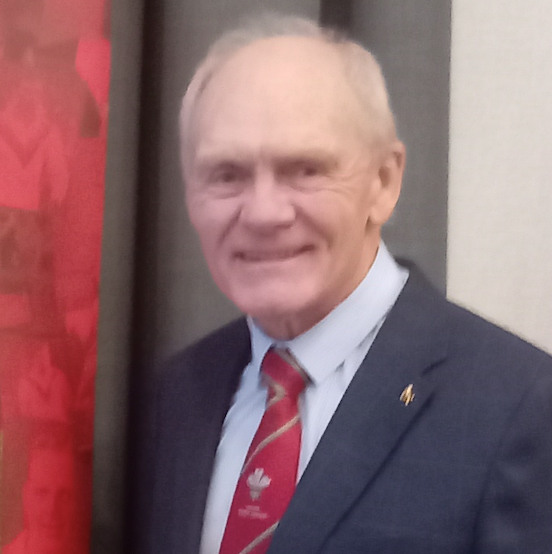
| Date Of Birth | 02/04/1954 |
| Place Of Birth | Loughor |
| Education | Cardiff and Vale College, Gowerton Grammar School |
| Clubs | Salford RLFC, St Helens, Penclawdd |
| Regions | Scarlets |
| Honours | Wales RL, Wales, West Wales, Wales B, Wales Schools |
| Invitational | Barbarians |
| Managed | Wales RL Management, Wales Students, Doncaster Knights, North Wales Crusaders, Canada, RGC 1404, Wales RL, Worcester Warriors, Wales, Swansea, London Welsh, South Wales (1996), St Helens |
Position – WRL Performance Director
Date of appointment - September 2023
Email here
Clive Griffiths is highly recognised as the most successful head coach ever in Welsh international rugby league, having coached our sides to four World Cup semi-finals and a number of trophies at men's and student level.
But it all started when he was a player. "Clive the Ship" played for Llanelli in rugby union, was capped once for Wales in that sport and represented Barbarians, before signing for St Helens for a then world record £27,000 in 1979. In exactly 100 appearances for the club, he scored 598 points from 276 goals, 8 drop goals and 11 tries. It was there that he won his two Wales Rugby League caps. He then played for Salford for two seasons before retiring.
He joined the coaching staff at St Helens which is where this part of his career started. He became involved with Wales as their our first Students World Cup coach in 1989 before being appointed as head coach of the revived Wales men's side in the 1991-92 season. He remained as Wales Students head coach until 1992,leading them to the semi-finals of that year's World Cup. His Wales men's side, full of top level rugby union converts, won the 1995 European Championship, then reached the semi-finals of the World Cup in both 1995 and 2000. Clive stepped down following the 2000 tournament after a memorable semi-final against Australia, but returned for a brief spell in 2009 as an adviser to new head coach Iestyn Harris. He turned to coaching rugby union but came back to League with Wales Students again in 2009, coaching them to the Four Nations title, repeating that in 2012 then leading Wales Students to the 2013 World Cup semi-finals. By that time, he was head coach of the new North Wales Crusaders side, leading them to a League 1 promotion and Northern Rail Bowl double, again in 2013. His success that year gave him the League 1 Coach of the Year award, but he quit in 2014 to continue his union career with Championship club Doncaster Knights before retiring in 2020, later to return as Wales Students coach for a third spell, building his career total to 50 in charge of Wales Students, and his 25 with Wales men gives him a WRL record of 75 international matches as a head coach.
Core Competencies & Areas of Support
Qualified Teacher, Lecturer, Level 3 Coach (Both Codes). Coach Mentor with the RFU. Director of Rugby.
WRL Strategic Vision & Success Metrics
What does success look like in 12 months? (e.g., specific governance changes, financial targets, or participation numbers)
Continued success and growth within all aspects of Wales Rugby League, especially our player pathways.
An upskilled staffing/coaching structure, including the ability to generate much-needed revenue in the face of a shoestring budget.
Improve Performance structure including coach education plus the strategies already in place.
Continue planning and recruitment of dedicated volunteers.
Continued growth in the numbers playing Rugby League.
What does success look like in 2–5 Years? (e.g., the long-term impact on the sport in Wales and the Board’s legacy)
Two years - Increased Sport Wales Funding and new income streams. Continued professional delivery which becomes recognised by key stakeholders - as a truly inclusive sport. Continue the significant growth in women and disability teams.
Three years - Growth across all areas-– on and off the field. Close the gap on our more established competitors. Increased staffing. More international teams in 2030 World Cup.
Five years - Exponential growth in Rugby League with the creation of a semi-pro team. A significant rise up the world ranking as the second-highest rated European nation.
Identify the three most urgent issues we must address in the short- to medium-term and provide your initial thoughts on the solutions.
1. Income streams.
2. Stability and longevity in staffing - with accompanying specialism.
3. Playing numbers.
What areas would you like to support the board in? Would you like to lead or support a Lead?
Wherever and whenever I can. I’ve been involved with WRL since 1988! I am a qualified teacher and coach educator plus an international coach who has enjoyed humbling success in both codes e.g., RL European Tri Nations Title in 1995 together with a RU Grand Slam 2005.
I would dearly like to run and deliver WRL’s coach education programme but ‘outdated and baffling’ rules prevent me from doing so!
Beyond the Boardroom
Outside of your professional life, what are your key interests, hobbies, or family commitments?
My family, training regime - and rugby with league as a priority.
What are your two greatest achievements (include an example of personal and work-related)
1. As Performance Director, helping give more profile and substance to our Performance Structures. Delivering presentations to Super League clubs, thus updating them on WRL’s aims, objectives and growth.
As Coach - As WRL head coach, presiding over the most international matches in our history [75], most successful coach [win ratio & titles], European Champions, for the first time in 57 years, and 5 World Cup semi-finals, [3 Student, 2 Professional]. 6 World Cups [4 Student, 2 Professional]. Super League World 9’s winners (in Fiji)
Only Welshman to coach Great Britain on a Lions Tour [1996]. Only Welshman to coach GB Students on an Ashes Tour and win a series in Australia.
2. Personal. As a player – becoming a dual code International. Heritage number 320 [+Sons Rhys 449 and Owain 500.]
Date of appointment - September 2023
Email here
Clive Griffiths is highly recognised as the most successful head coach ever in Welsh international rugby league, having coached our sides to four World Cup semi-finals and a number of trophies at men's and student level.
But it all started when he was a player. "Clive the Ship" played for Llanelli in rugby union, was capped once for Wales in that sport and represented Barbarians, before signing for St Helens for a then world record £27,000 in 1979. In exactly 100 appearances for the club, he scored 598 points from 276 goals, 8 drop goals and 11 tries. It was there that he won his two Wales Rugby League caps. He then played for Salford for two seasons before retiring.
He joined the coaching staff at St Helens which is where this part of his career started. He became involved with Wales as their our first Students World Cup coach in 1989 before being appointed as head coach of the revived Wales men's side in the 1991-92 season. He remained as Wales Students head coach until 1992,leading them to the semi-finals of that year's World Cup. His Wales men's side, full of top level rugby union converts, won the 1995 European Championship, then reached the semi-finals of the World Cup in both 1995 and 2000. Clive stepped down following the 2000 tournament after a memorable semi-final against Australia, but returned for a brief spell in 2009 as an adviser to new head coach Iestyn Harris. He turned to coaching rugby union but came back to League with Wales Students again in 2009, coaching them to the Four Nations title, repeating that in 2012 then leading Wales Students to the 2013 World Cup semi-finals. By that time, he was head coach of the new North Wales Crusaders side, leading them to a League 1 promotion and Northern Rail Bowl double, again in 2013. His success that year gave him the League 1 Coach of the Year award, but he quit in 2014 to continue his union career with Championship club Doncaster Knights before retiring in 2020, later to return as Wales Students coach for a third spell, building his career total to 50 in charge of Wales Students, and his 25 with Wales men gives him a WRL record of 75 international matches as a head coach.
Core Competencies & Areas of Support
Qualified Teacher, Lecturer, Level 3 Coach (Both Codes). Coach Mentor with the RFU. Director of Rugby.
WRL Strategic Vision & Success Metrics
What does success look like in 12 months? (e.g., specific governance changes, financial targets, or participation numbers)
Continued success and growth within all aspects of Wales Rugby League, especially our player pathways.
An upskilled staffing/coaching structure, including the ability to generate much-needed revenue in the face of a shoestring budget.
Improve Performance structure including coach education plus the strategies already in place.
Continue planning and recruitment of dedicated volunteers.
Continued growth in the numbers playing Rugby League.
What does success look like in 2–5 Years? (e.g., the long-term impact on the sport in Wales and the Board’s legacy)
Two years - Increased Sport Wales Funding and new income streams. Continued professional delivery which becomes recognised by key stakeholders - as a truly inclusive sport. Continue the significant growth in women and disability teams.
Three years - Growth across all areas-– on and off the field. Close the gap on our more established competitors. Increased staffing. More international teams in 2030 World Cup.
Five years - Exponential growth in Rugby League with the creation of a semi-pro team. A significant rise up the world ranking as the second-highest rated European nation.
Identify the three most urgent issues we must address in the short- to medium-term and provide your initial thoughts on the solutions.
1. Income streams.
2. Stability and longevity in staffing - with accompanying specialism.
3. Playing numbers.
What areas would you like to support the board in? Would you like to lead or support a Lead?
Wherever and whenever I can. I’ve been involved with WRL since 1988! I am a qualified teacher and coach educator plus an international coach who has enjoyed humbling success in both codes e.g., RL European Tri Nations Title in 1995 together with a RU Grand Slam 2005.
I would dearly like to run and deliver WRL’s coach education programme but ‘outdated and baffling’ rules prevent me from doing so!
Beyond the Boardroom
Outside of your professional life, what are your key interests, hobbies, or family commitments?
My family, training regime - and rugby with league as a priority.
What are your two greatest achievements (include an example of personal and work-related)
1. As Performance Director, helping give more profile and substance to our Performance Structures. Delivering presentations to Super League clubs, thus updating them on WRL’s aims, objectives and growth.
As Coach - As WRL head coach, presiding over the most international matches in our history [75], most successful coach [win ratio & titles], European Champions, for the first time in 57 years, and 5 World Cup semi-finals, [3 Student, 2 Professional]. 6 World Cups [4 Student, 2 Professional]. Super League World 9’s winners (in Fiji)
Only Welshman to coach Great Britain on a Lions Tour [1996]. Only Welshman to coach GB Students on an Ashes Tour and win a series in Australia.
2. Personal. As a player – becoming a dual code International. Heritage number 320 [+Sons Rhys 449 and Owain 500.]